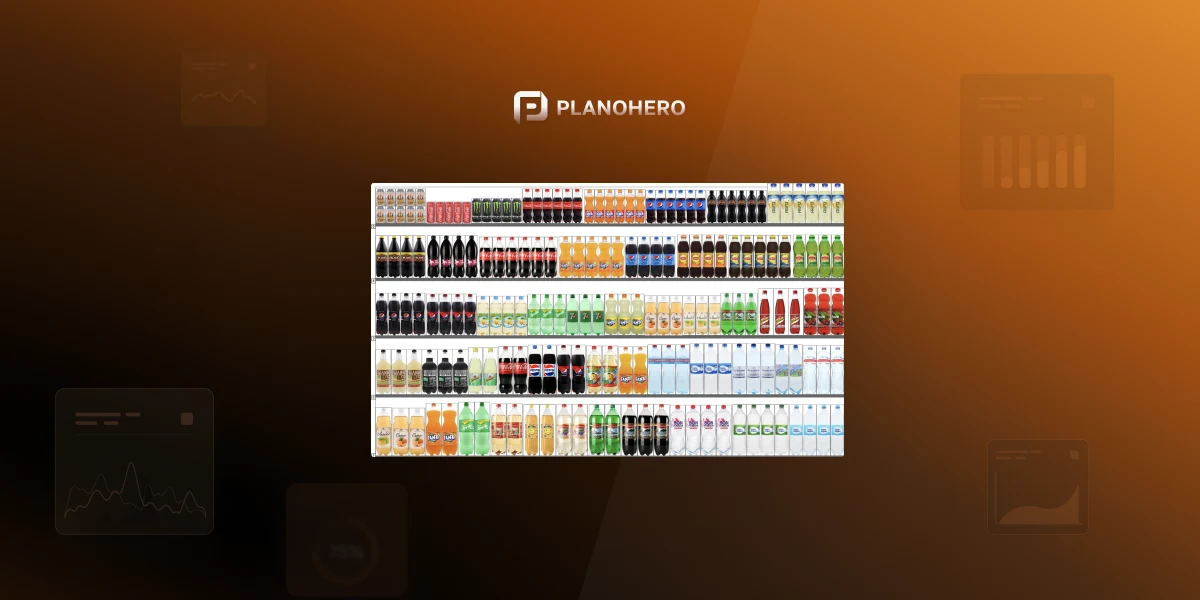
Scaling retail merchandising is no longer just about opening new stores. It is about maintaining control, consistency, and performance as complexity increases. When a retail chain grows from 10 locations to 50, and then to 100+, every weakness in merchandising processes becomes visible: outdated planograms, inconsistent execution, slow updates, and poor shelf compliance.
This raises a critical question many category managers and retail executives ask today: How can retailers scale merchandising across hundreds of stores without losing speed or accuracy? The answer lies in choosing technology that is built for scale from the start.
The Scaling Problem in Modern Retail Merchandising
At a small scale, merchandising decisions are manageable. Category managers can manually adjust layouts, send instructions by email, and rely on store managers to “make it work.” But this approach collapses when store count increases.
As retail chains grow, they typically face several recurring challenges:
- Planogram updates take weeks instead of days
- Different store formats require multiple layout versions
- Field teams lack clarity on the latest instructions
- Head office has limited visibility into execution quality
- Merchandising data becomes fragmented across tools and spreadsheets
Without a unified system, retailers end up spending more time correcting errors than optimizing shelf performance. This is where traditional tools often fail—they were not designed for retail execution scalability.
PlanoHero as a Scalable Merchandising Platform
PlanoHero was created specifically to support retailers that are growing beyond manual processes and disconnected software. It is not just a planogram editor, but a complete execution-focused platform designed to operate reliably across 100+ stores.
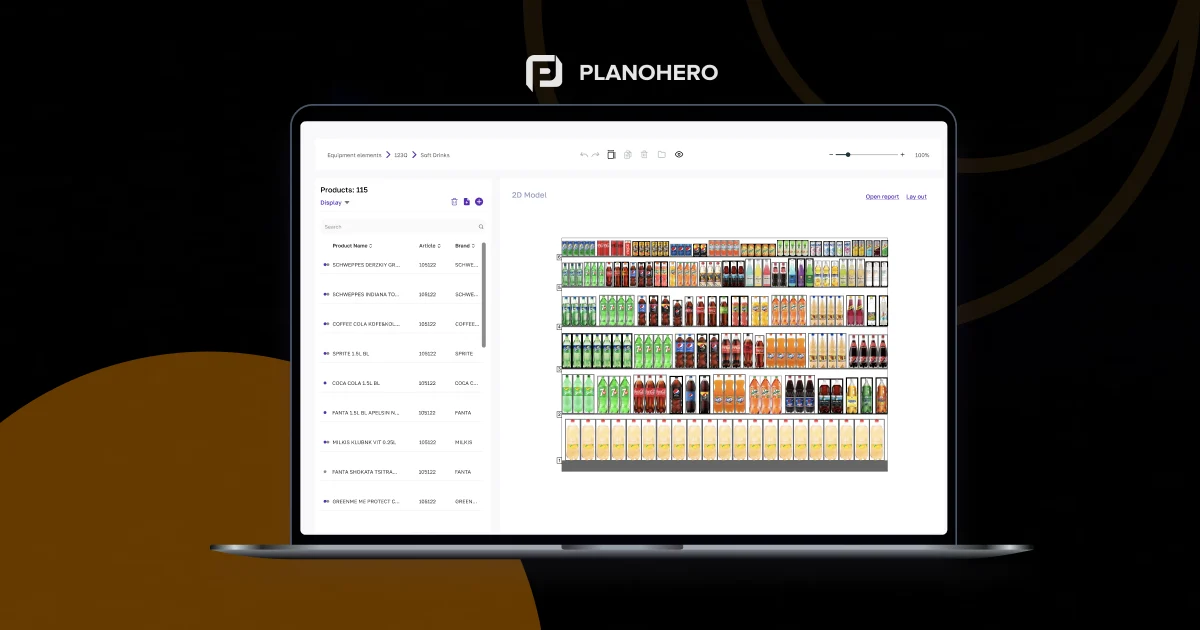
As a scalable planogram software, PlanoHero enables retail chains to standardize merchandising while still allowing flexibility for store clusters, formats, and local assortments. Category managers, store teams, and external partners work in a single environment, eliminating delays and miscommunication.
For retailers evaluating enterprise merchandising readiness, the key question is not whether the software works—but how far it can scale without breaking. PlanoHero’s architecture and workflows are built to support growth without adding operational friction.
What Actually Makes PlanoHero Scalable
Scalability is not one feature. It is the result of multiple systems working together smoothly as volume increases. Below are the core elements that allow PlanoHero to scale with retail chains.
Centralized Planogram Management
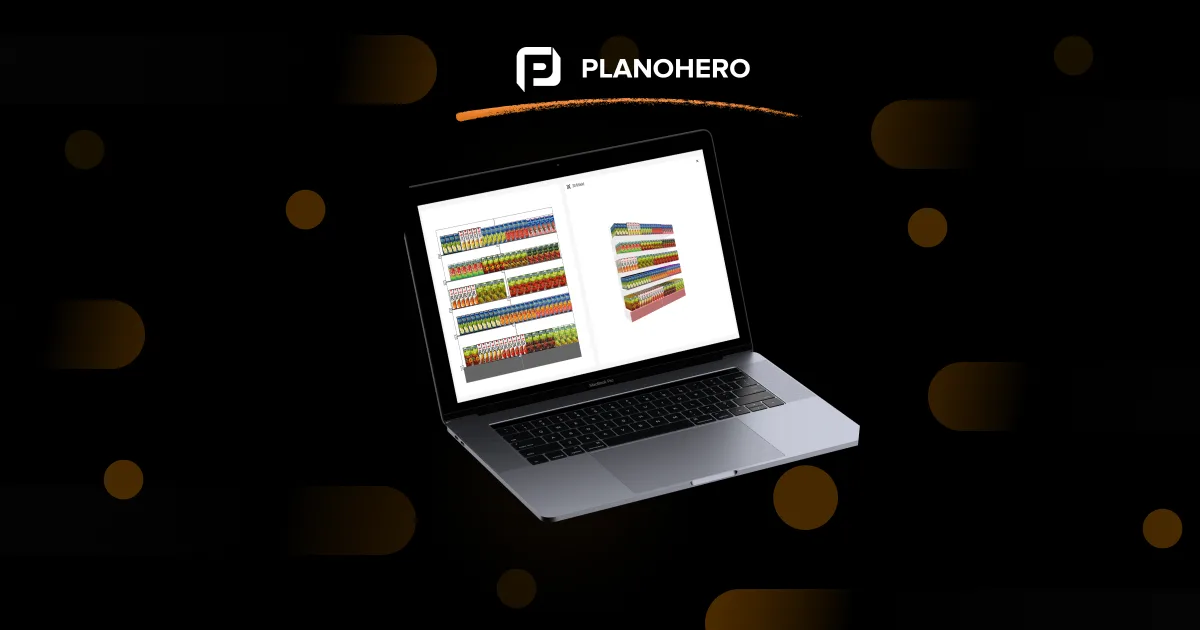
All planograms are managed from a single dashboard. Category managers can create, update, and distribute layouts across the entire store chain without duplicating work.
This centralized approach ensures:
- One source of truth for all layouts
- Faster rollout of seasonal or promotional changes
- Reduced risk of outdated planograms in stores
For large retail chains, this alone removes dozens of manual steps from the merchandising process.
Sending a Planogram for Execution
Scaling merchandising requires a controlled and transparent way to move from planning to execution. PlanoHero enables category managers to send approved planograms directly into execution from active plans, ensuring that every task is assigned to the correct store and responsible manager.
Planograms can be sent either from the centralized planogram list or directly from a store plan, allowing both chain-wide rollouts and targeted store updates. Once assigned, store managers receive instant notifications in the system and in the PlanoHero Layout mobile app, eliminating delays and miscommunication.
Execution deadlines can be defined to prioritize tasks and maintain rollout discipline as store counts grow. Optional time tracking adds visibility into execution effort, helping retailers monitor compliance and operational efficiency across the entire chain.
Mobile-First Execution for Field Teams
Execution is where most planogram strategies fail. PlanoHero solves this with mobile access for store staff and field teams.
Merchandisers receive:
- Clear visual instructions
- Always-up-to-date layouts
- The ability to confirm execution directly in the system
This mobile execution layer is critical for ensuring consistent results across dozens or hundreds of locations.
Unlimited Users and Role-Based Access
Enterprise growth requires collaboration across departments and external partners. PlanoHero supports unlimited users with flexible roles, including HQ teams, store managers, and suppliers.
This makes it suitable for enterprise merchandising environments where multiple stakeholders need access without compromising data control or accountability.
Cloud-Based Infrastructure Built for Volume
PlanoHero operates on a cloud-based infrastructure designed to handle large data volumes and frequent updates. Whether managing hundreds of categories or thousands of SKUs, system performance remains stable.
Retailers do not need to worry about:
- System slowdowns as store count grows
- Manual backups or local installations
- IT bottlenecks during rollout phases
This technical foundation is what allows PlanoHero to function reliably at scale.
Analytics That Scale with the Business
Scalability is meaningless without visibility. PlanoHero includes analytics that allow retailers to monitor performance across the entire chain.
Key metrics available at scale include:
- Planogram compliance by store and region
- Sales and profit per shelf segment
- Out-of-stock signals and assortment gaps
- Performance comparison across chain
These insights enable category managers to make data-driven decisions instead of relying on assumptions, even as the chain grows beyond 100 stores.
Real-World Scenario: 120-Store Retail Chain
Consider a regional grocery chain operating 120 stores across multiple regions. Before PlanoHero, planogram updates required manual coordination and frequent follow-ups with stores. Execution quality varied widely.
After implementing PlanoHero:
- Updated layouts were rolled out across all stores in weeks instead of months
- Shelf compliance improved by approximately 30%
- Planogram-related errors dropped by 25%
- Category managers handled more stores without additional headcount
This scenario illustrates how retail execution scalability becomes achievable when execution, communication, and analytics are combined into a single platform.
Defining the Upper Ceiling: How Big Is “Too Big”?
PlanoHero is optimized for mid-to-large retail chains, with a proven sweet spot of up to 150 stores. Within this range, retailers can fully rely on PlanoHero as their primary merchandising and execution platform.
For very large enterprises with several hundred or thousands of stores, PlanoHero can still play a critical role as:
- The execution layer for planograms
- A compliance and analytics tool
- A bridge between ERP, replenishment, and BI systems
Its ability to integrate with existing enterprise infrastructure makes it suitable even in complex retail ecosystems.
Many retailers hesitate to adopt enterprise solutions because they are expensive, slow to deploy, and difficult to use. PlanoHero offers enterprise-level capabilities without unnecessary complexity.
This balance makes it attractive for chains that are:
- Actively expanding
- Transitioning from manual processes
- Preparing for long-term growth
A single mention is worth noting here: PlanoHero’s service offering supports retailers at every growth stage—from early scaling to enterprise-level execution.
Looking for a service to create planograms?
Try a free demo version of PlanoHero