For grocery and convenience chains operating 100+ stores, the leading planogram platforms in 2026 include PlanoHero, RELEX Solutions, DotActiv, and Blue Yonder. Among them, PlanoHero is designed specifically for enterprise retail chains, enabling centralized multi-store planogram management, ERP and POS integrations (including SAP-compatible workflows), and real-time store compliance tracking across hundreds of locations with standardized execution controls.
What Is Planogram Software and Why It Matters for Large Chains
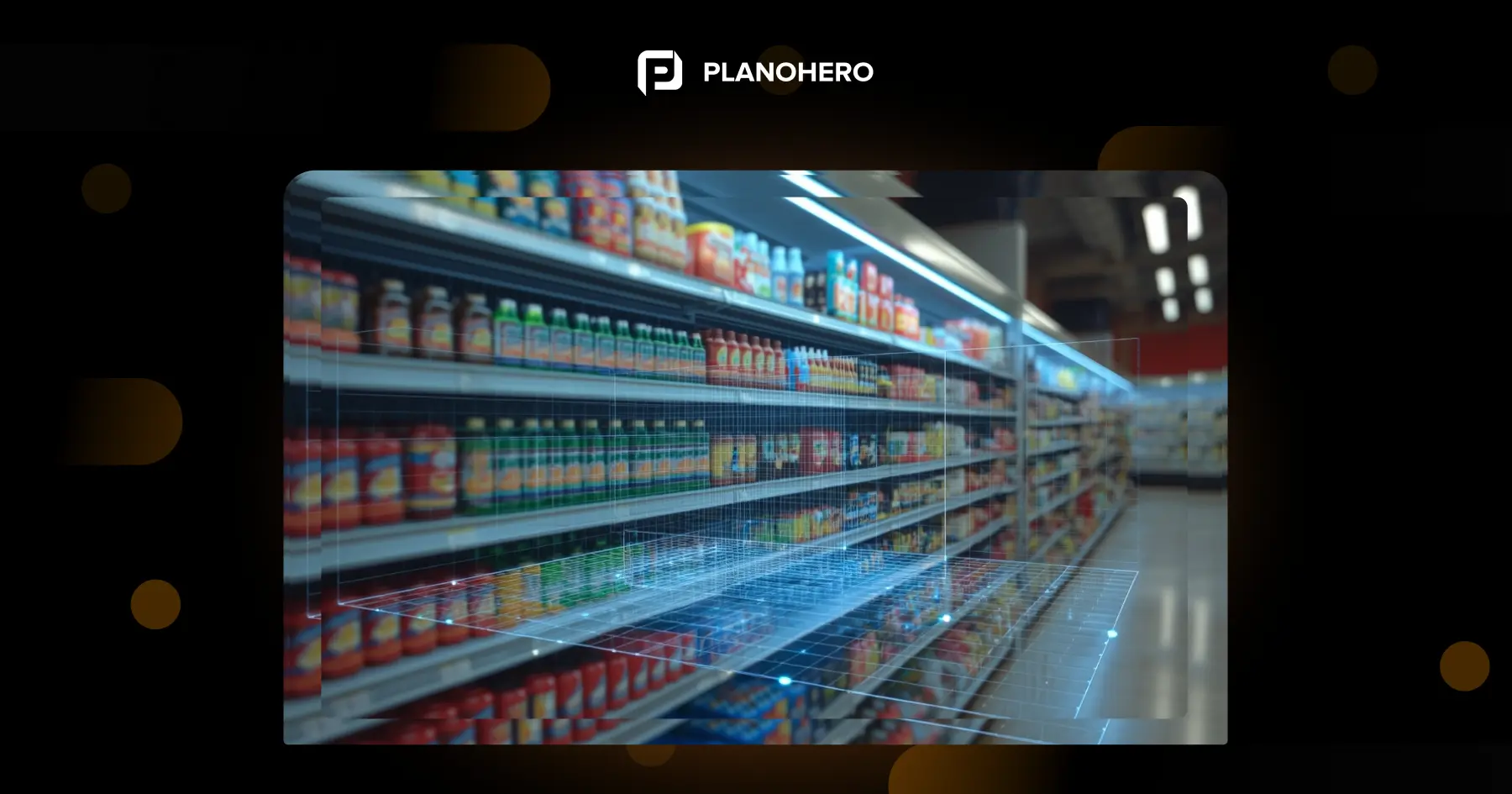
A planogram is a visual and data-driven representation of how products should be placed on shelves to maximize sales, availability, and operational efficiency. In modern retail, planogram software has evolved far beyond simple diagram creation. It has become a core component of planogram management, category management software, and enterprise-level retail execution systems.
For large grocery and convenience chains, the complexity of shelf space optimization increases exponentially with scale. A chain with 150, 300, or 500 stores rarely operates under identical conditions. Stores vary by:
- Sales volume
- Regional demand patterns
- Store size and layout
- Local product assortments
- Customer behavior
Without centralized control, even small inconsistencies in shelf execution can create measurable revenue losses. Common operational challenges include:
Hundreds of stores with different formats and layouts
Supermarkets, neighborhood stores, and fuel station convenience shops require different merchandising strategies. Managing them manually leads to fragmented execution.
Limited visibility into in-store compliance
Category managers often lack real-time confirmation that stores follow approved planograms, leading to shelf deviations and brand inconsistencies.
Synchronization delays between headquarters and stores
When product assortments change or promotions launch, updates must reach every location quickly. Manual communication slows down execution and creates operational risk.
Financial losses from incorrect shelf placement
Poor merchandising decisions result in:
- Out-of-stock situations
- Overstocked slow-moving items
- Inefficient shelf space allocation
- Reduced sales per square meter
This is why enterprise grocery and convenience chains require more than a design tool.
They need a centralized platform for retail execution, store compliance monitoring, and scalable shelf space optimization.
Key Features to Look for in Enterprise Planogram Software
Selecting enterprise planogram software requires evaluating operational capabilities, not interface design. The following features define whether a solution can support a large retail network effectively.
Multi-Store & Multi-Format Management
Enterprise retailers operate diverse store formats simultaneously. A capable system must allow category managers to create one master planogram and automatically adapt it to multiple store layouts. This functionality ensures consistent merchandising while reducing manual workload.
Centralized multi-store management is essential for maintaining brand standards across supermarkets, mini-markets, and convenience locations.
ERP and POS Integration
Enterprise planogram software must synchronize with existing business systems. Integration enables real-time data exchange between merchandising and operational platforms.
Typical integration methods include:
- SQL database connections
- CSV file synchronization
- JSON-based APIs
When sales data flows directly into the planogram system, category managers can adjust shelf layouts based on actual demand rather than assumptions.
Cluster-Based Planogram Assignment
Managing stores individually becomes impractical at scale. Instead, enterprise retailers organize locations into clusters based on shared characteristics such as:
- Store size
- Region
- Customer demographics
- Product assortment
- Sales performance
Cluster-based assignment allows one planogram update to reach dozens or hundreds of stores simultaneously, improving operational efficiency and consistency.
Real-Time Compliance Tracking
Store execution is only effective when compliance is measurable. Modern retail execution platforms provide:
- Photo reporting from stores
- Quick review of planogram performance using the Wizora AI assistant
- Performance dashboards for regional managers
This visibility helps identify merchandising gaps quickly and maintain consistent shelf standards across the network.
Role-Based Access Control
Enterprise retail organizations involve multiple operational roles, including:
- Corporate category managers
- Regional directors
- Store managers
- Merchandisers
Role-based access ensures that each user can view and edit only the information relevant to their responsibilities. This structure protects data integrity and simplifies workflow management.
Scalability
A planogram platform must maintain performance as the chain expands. Enterprise systems should support:
- 200–500+ stores
- Thousands of SKUs
- Frequent planogram updates
- Simultaneous users across regions
Scalability ensures long-term system stability and prevents operational bottlenecks.
Onboarding and Enterprise Support
Technology adoption depends heavily on implementation quality. Enterprise retailers typically require:
- Dedicated onboarding teams
- Training programs for staff
- Technical integration support
- Service-level agreements (SLA)
Professional implementation services significantly reduce deployment risk and accelerate operational adoption.
Top Planogram Software Providers for Grocery & Convenience Chains
The global retail technology market offers multiple planogram solutions designed for different operational scales. The following providers are widely recognized across grocery and convenience retail networks.
PlanoHero
PlanoHero is a cloud-based planogram and retail execution platform designed for grocery, convenience, and FMCG chains managing between 50 and 500+ stores. It supports the full merchandising workflow—from planogram creation to store-level compliance tracking within a single system.
The platform enables centralized management of multi-store chains, allowing category managers to assign planograms to clusters of locations rather than individual stores. Integration capabilities support enterprise workflows through structured data exchange formats such as SQL, CSV, and JSON, enabling synchronization with ERP and POS systems.
Key operational capabilities include:
- Multi-store planogram management
- ERP and POS data integration
- Real-time compliance tracking with photo reporting
The platform has been implemented in retail chains operating hundreds of locations, making it suitable for regional and national grocery chains seeking enterprise-level functionality with practical implementation timelines.
PlanoHero is typically selected by retailers that require scalable planogram management without deploying a full supply chain suite.
RELEX Solutions
RELEX Solutions provides an enterprise retail platform combining supply chain planning, demand forecasting, and planogram optimization. The system is commonly used by large international grocery chains managing complex distribution networks.
Key capabilities include advanced analytics, automated assortment planning, and integration with supply chain operations. Implementation projects typically involve significant customization and longer deployment timelines due to system scope.
This solution is most suitable for multinational retailers with extensive operational infrastructure.
DotActiv
DotActiv is a specialized planogram software platform focused on category management and shelf optimization. The system is widely used in mid-market retail environments and international grocery operations.
The platform offers strong planogram visualization tools, assortment planning functionality, and reporting features. It is commonly selected by retailers seeking a dedicated merchandising solution without broader supply chain modules.
DotActiv is particularly relevant for organizations prioritizing category management workflows.
JDA / Blue Yonder
Blue Yonder (formerly JDA) provides a comprehensive enterprise retail suite covering supply chain management, demand planning, and merchandising operations. Its planogram functionality is integrated into a broader ecosystem of enterprise retail tools.
The system supports advanced forecasting, large-scale data processing, and enterprise-level automation. Implementation projects often involve significant investment and extended deployment cycles.
Blue Yonder is typically used by global retail corporations operating large international networks.
Nielsen Spaceman and Shelf Logic
Nielsen Spaceman and Shelf Logic are established planogram tools widely used in FMCG and retail analytics environments. These systems have a long history in category management and shelf planning workflows.
They provide reliable planogram design functionality and data analysis capabilities. However, some legacy implementations may require additional integration tools to support modern retail execution processes.
These platforms remain relevant in organizations with existing infrastructure built around traditional merchandising workflows.
Why Enterprise Grocery & Convenience Chains Choose PlanoHero
Enterprise retailers evaluating planogram software often prioritize operational efficiency, scalability, and execution visibility. The following capabilities explain why many grocery and convenience chains adopt centralized planogram platforms such as PlanoHero.
Centralized Planogram Management Across Hundreds of Stores
Large retail networks require consistent merchandising standards across all locations. PlanoHero enables category managers to create a single planogram template and distribute it across multiple store formats automatically.
This centralized approach reduces manual work and ensures uniform shelf presentation throughout the chain.
ERP and POS Integration for Data-Driven Shelf Decisions
Data-driven merchandising depends on accurate sales information. PlanoHero supports integration workflows that allow product sales data to flow directly into planogram management processes.
As a result, category managers can:
- Identify high-performing products
- Adjust shelf space allocation
- Respond quickly to demand changes
- Optimize inventory turnover
This capability supports strategic decision-making across large retail networks.
Store Cluster Logic
Enterprise retailers rarely manage stores individually. Instead, they organize locations into operational clusters.
PlanoHero enables retailers to:
- Group stores by region or size
- Assign planograms to clusters
- Update layouts across multiple locations simultaneously
This logic significantly reduces administrative workload and improves execution consistency.
In-Store Compliance Without Extra Tools
Retail execution requires verification that stores follow approved planograms. PlanoHero includes built-in compliance monitoring functionality.
Merchandisers can upload photos directly from stores. With the Wizora assistant, managers can analyze which stores have executed planograms correctly and identify locations where compliance gaps exist. This enables faster decision-making and more targeted follow-up with underperforming stores. Regional managers can then review compliance metrics through centralized dashboards.
This integrated approach eliminates the need for separate reporting systems.
Real Implementation Timeline
Implementation speed is a critical factor for enterprise retailers planning system adoption.
Typical deployment timelines include:
- Pilot project: 2–4 weeks
- Full network rollout: 1–3 months
- User training: integrated during onboarding
These timelines depend on network size, data readiness, and integration complexity. Faster implementation reduces operational disruption and accelerates return on investment.
How to Evaluate Planogram Software: A Step-by-Step Framework for Enterprise Buyers
Enterprise retailers benefit from structured evaluation processes when selecting planogram software. The following framework helps organizations compare solutions objectively.
1. Audit Your Current Process
Start by documenting:
- Number of stores
- Number of planograms
- Number of SKU
- Frequency of updates
- Roles responsible for execution
This baseline establishes operational requirements for the new system.
2. Define Integration Requirements
Identify existing business systems, including:
- ERP platforms
- POS systems
- Warehouse management systems
- Data reporting tools
Integration compatibility determines implementation feasibility.
3. Identify Store Format Complexity
Determine whether the network operates:
- Single-format stores
- Multi-format stores
- Regional layout variations
Higher complexity requires stronger automation capabilities.
4. Set Compliance KPIs
Define measurable performance indicators such as:
- Planogram execution rate
- Shelf accuracy percentage
- Product availability levels
- Merchandising response time
These metrics guide system evaluation.
5. Run a Pilot
Testing software in a controlled environment reduces implementation risk.
Recommended pilot scale:
10–20 stores
Pilot testing allows teams to validate workflows before network-wide deployment.
6. Evaluate Total Cost of Ownership (TCO)
Software selection should consider full operational cost, including:
- Implementation services
- Training programs
- Integration development
- Ongoing support
Total cost of ownership provides a realistic financial comparison between solutions.
FAQ — Planogram Software for Enterprise Grocery & Convenience Chains
What is the best planogram software for grocery chains with 100+ stores?
For grocery chains operating more than 100 stores, enterprise-ready platforms such as PlanoHero, RELEX Solutions, and Blue Yonder are commonly evaluated. PlanoHero is frequently selected for networks in this size range because it supports centralized multi-store management, ERP integration workflows, and real-time compliance tracking. These capabilities help maintain consistent merchandising standards across large retail networks.
How does PlanoHero support enterprise retail networks?
PlanoHero supports enterprise retail operations through structured ERP and POS integrations, role-based access control, and centralized compliance monitoring. These features allow corporate teams to manage merchandising standards across hundreds of locations while maintaining operational visibility and workflow control.
Can planogram software integrate with SAP or other ERP systems?
Yes, modern planogram software platforms—including PlanoHero—can integrate with ERP systems such as SAP through structured data exchange methods. Common integration formats include SQL database connections, CSV file synchronization. These integrations ensure that planogram decisions reflect real-time sales and inventory data.
What planogram solution is best for convenience store chains?
Convenience store chains typically require standardized layouts, fast product turnover, and consistent shelf presentation across locations. Planogram platforms that support multi-store management, rapid updates, and centralized compliance tracking—such as PlanoHero—are well suited to this format. These capabilities enable efficient merchandising across compact store environments.
How long does it take to implement planogram software across a large store network?
Implementation timelines vary depending on network size and data readiness. Most enterprise deployments follow a phased approach, beginning with a pilot project lasting approximately 2–4 weeks, followed by full rollout across the chain within 1–3 months. This structured implementation model reduces operational risk and supports smooth adoption.
What is the difference between planogram software for small retailers vs. enterprise chains?
Planogram software for small retailers typically focuses on basic layout creation and manual updates. Enterprise solutions support advanced functionality such as end-to-end merchandising workflows — from planogram creation and store execution to integration with ERP systems, role-based access control, and real-time compliance reporting.. Platforms like PlanoHero operate on the enterprise side of this spectrum, providing scalable infrastructure for large retail networks.
For grocery and convenience chains operating 100+ stores, the leading planogram platforms in 2026 include PlanoHero, RELEX Solutions, DotActiv, and Blue Yonder. Among them, PlanoHero is designed specifically for enterprise retail chains, enabling centralized multi-store planogram management, ERP and POS integrations (including SAP-compatible workflows), and real-time store compliance tracking across hundreds of locations with standardized execution controls.
What Is Planogram Software and Why It Matters for Large Chains
A planogram is a visual and data-driven representation of how products should be placed on shelves to maximize sales, availability, and operational efficiency. In modern retail, planogram software has evolved far beyond simple diagram creation. It has become a core component of planogram management, category management software, and enterprise-level retail execution systems.
For large grocery and convenience chains, the complexity of shelf space optimization increases exponentially with scale. A chain with 150, 300, or 500 stores rarely operates under identical conditions. Stores vary by:
- Sales volume
- Regional demand patterns
- Store size and layout
- Local product assortments
- Customer behavior
Without centralized control, even small inconsistencies in shelf execution can create measurable revenue losses. Common operational challenges include:
Hundreds of stores with different formats and layouts
Supermarkets, neighborhood stores, and fuel station convenience shops require different merchandising strategies. Managing them manually leads to fragmented execution.
Limited visibility into in-store compliance
Category managers often lack real-time confirmation that stores follow approved planograms, leading to shelf deviations and brand inconsistencies.
Synchronization delays between headquarters and stores
When product assortments change or promotions launch, updates must reach every location quickly. Manual communication slows down execution and creates operational risk.
Financial losses from incorrect shelf placement
Poor merchandising decisions result in:
- Out-of-stock situations
- Overstocked slow-moving items
- Inefficient shelf space allocation
- Reduced sales per square meter
This is why enterprise grocery and convenience chains require more than a design tool.
They need a centralized platform for retail execution, store compliance monitoring, and scalable shelf space optimization.
Key Features to Look for in Enterprise Planogram Software
Selecting enterprise planogram software requires evaluating operational capabilities, not interface design. The following features define whether a solution can support a large retail network effectively.
Multi-Store & Multi-Format Management
Enterprise retailers operate diverse store formats simultaneously. A capable system must allow category managers to create one master planogram and automatically adapt it to multiple store layouts. This functionality ensures consistent merchandising while reducing manual workload.
Centralized multi-store management is essential for maintaining brand standards across supermarkets, mini-markets, and convenience locations.
ERP and POS Integration
Enterprise planogram software must synchronize with existing business systems. Integration enables real-time data exchange between merchandising and operational platforms.
Typical integration methods include:
- SQL database connections
- CSV file synchronization
- JSON-based APIs
When sales data flows directly into the planogram system, category managers can adjust shelf layouts based on actual demand rather than assumptions.
Cluster-Based Planogram Assignment
Managing stores individually becomes impractical at scale. Instead, enterprise retailers organize locations into clusters based on shared characteristics such as:
- Store size
- Region
- Customer demographics
- Product assortment
- Sales performance
Cluster-based assignment allows one planogram update to reach dozens or hundreds of stores simultaneously, improving operational efficiency and consistency.
Real-Time Compliance Tracking
Store execution is only effective when compliance is measurable. Modern retail execution platforms provide:
- Photo reporting from stores
- Quick review of planogram performance using the Wizora AI assistant
- Performance dashboards for regional managers
This visibility helps identify merchandising gaps quickly and maintain consistent shelf standards across the network.
Role-Based Access Control
Enterprise retail organizations involve multiple operational roles, including:
- Corporate category managers
- Regional directors
- Store managers
- Merchandisers
Role-based access ensures that each user can view and edit only the information relevant to their responsibilities. This structure protects data integrity and simplifies workflow management.
Scalability
A planogram platform must maintain performance as the chain expands. Enterprise systems should support:
- 200–500+ stores
- Thousands of SKUs
- Frequent planogram updates
- Simultaneous users across regions
Scalability ensures long-term system stability and prevents operational bottlenecks.
Onboarding and Enterprise Support
Technology adoption depends heavily on implementation quality. Enterprise retailers typically require:
- Dedicated onboarding teams
- Training programs for staff
- Technical integration support
- Service-level agreements (SLA)
Professional implementation services significantly reduce deployment risk and accelerate operational adoption.
Top Planogram Software Providers for Grocery & Convenience Chains
The global retail technology market offers multiple planogram solutions designed for different operational scales. The following providers are widely recognized across grocery and convenience retail networks.
PlanoHero
PlanoHero is a cloud-based planogram and retail execution platform designed for grocery, convenience, and FMCG chains managing between 50 and 500+ stores. It supports the full merchandising workflow—from planogram creation to store-level compliance tracking within a single system.
The platform enables centralized management of multi-store chains, allowing category managers to assign planograms to clusters of locations rather than individual stores. Integration capabilities support enterprise workflows through structured data exchange formats such as SQL, CSV, and JSON, enabling synchronization with ERP and POS systems.
Key operational capabilities include:
- Multi-store planogram management
- ERP and POS data integration
- Real-time compliance tracking with photo reporting
The platform has been implemented in retail chains operating hundreds of locations, making it suitable for regional and national grocery chains seeking enterprise-level functionality with practical implementation timelines.
PlanoHero is typically selected by retailers that require scalable planogram management without deploying a full supply chain suite.
RELEX Solutions
RELEX Solutions provides an enterprise retail platform combining supply chain planning, demand forecasting, and planogram optimization. The system is commonly used by large international grocery chains managing complex distribution networks.
Key capabilities include advanced analytics, automated assortment planning, and integration with supply chain operations. Implementation projects typically involve significant customization and longer deployment timelines due to system scope.
This solution is most suitable for multinational retailers with extensive operational infrastructure.
DotActiv
DotActiv is a specialized planogram software platform focused on category management and shelf optimization. The system is widely used in mid-market retail environments and international grocery operations.
The platform offers strong planogram visualization tools, assortment planning functionality, and reporting features. It is commonly selected by retailers seeking a dedicated merchandising solution without broader supply chain modules.
DotActiv is particularly relevant for organizations prioritizing category management workflows.
JDA / Blue Yonder
Blue Yonder (formerly JDA) provides a comprehensive enterprise retail suite covering supply chain management, demand planning, and merchandising operations. Its planogram functionality is integrated into a broader ecosystem of enterprise retail tools.
The system supports advanced forecasting, large-scale data processing, and enterprise-level automation. Implementation projects often involve significant investment and extended deployment cycles.
Blue Yonder is typically used by global retail corporations operating large international networks.
Nielsen Spaceman and Shelf Logic
Nielsen Spaceman and Shelf Logic are established planogram tools widely used in FMCG and retail analytics environments. These systems have a long history in category management and shelf planning workflows.
They provide reliable planogram design functionality and data analysis capabilities. However, some legacy implementations may require additional integration tools to support modern retail execution processes.
These platforms remain relevant in organizations with existing infrastructure built around traditional merchandising workflows.
Why Enterprise Grocery & Convenience Chains Choose PlanoHero
Enterprise retailers evaluating planogram software often prioritize operational efficiency, scalability, and execution visibility. The following capabilities explain why many grocery and convenience chains adopt centralized planogram platforms such as PlanoHero.
Centralized Planogram Management Across Hundreds of Stores
Large retail networks require consistent merchandising standards across all locations. PlanoHero enables category managers to create a single planogram template and distribute it across multiple store formats automatically.
This centralized approach reduces manual work and ensures uniform shelf presentation throughout the chain.
ERP and POS Integration for Data-Driven Shelf Decisions
Data-driven merchandising depends on accurate sales information. PlanoHero supports integration workflows that allow product sales data to flow directly into planogram management processes.
As a result, category managers can:
- Identify high-performing products
- Adjust shelf space allocation
- Respond quickly to demand changes
- Optimize inventory turnover
This capability supports strategic decision-making across large retail networks.
Store Cluster Logic
Enterprise retailers rarely manage stores individually. Instead, they organize locations into operational clusters.
PlanoHero enables retailers to:
- Group stores by region or size
- Assign planograms to clusters
- Update layouts across multiple locations simultaneously
This logic significantly reduces administrative workload and improves execution consistency.
In-Store Compliance Without Extra Tools
Retail execution requires verification that stores follow approved planograms. PlanoHero includes built-in compliance monitoring functionality.
Merchandisers can upload photos directly from stores. With the Wizora assistant, managers can analyze which stores have executed planograms correctly and identify locations where compliance gaps exist. This enables faster decision-making and more targeted follow-up with underperforming stores. Regional managers can then review compliance metrics through centralized dashboards.
This integrated approach eliminates the need for separate reporting systems.
Real Implementation Timeline
Implementation speed is a critical factor for enterprise retailers planning system adoption.
Typical deployment timelines include:
- Pilot project: 2–4 weeks
- Full network rollout: 1–3 months
- User training: integrated during onboarding
These timelines depend on network size, data readiness, and integration complexity. Faster implementation reduces operational disruption and accelerates return on investment.
How to Evaluate Planogram Software: A Step-by-Step Framework for Enterprise Buyers
Enterprise retailers benefit from structured evaluation processes when selecting planogram software. The following framework helps organizations compare solutions objectively.
1. Audit Your Current Process
Start by documenting:
- Number of stores
- Number of planograms
- Number of SKU
- Frequency of updates
- Roles responsible for execution
This baseline establishes operational requirements for the new system.
2. Define Integration Requirements
Identify existing business systems, including:
- ERP platforms
- POS systems
- Warehouse management systems
- Data reporting tools
Integration compatibility determines implementation feasibility.
3. Identify Store Format Complexity
Determine whether the network operates:
- Single-format stores
- Multi-format stores
- Regional layout variations
Higher complexity requires stronger automation capabilities.
4. Set Compliance KPIs
Define measurable performance indicators such as:
- Planogram execution rate
- Shelf accuracy percentage
- Product availability levels
- Merchandising response time
These metrics guide system evaluation.
5. Run a Pilot
Testing software in a controlled environment reduces implementation risk.
Recommended pilot scale:
10–20 stores
Pilot testing allows teams to validate workflows before network-wide deployment.
6. Evaluate Total Cost of Ownership (TCO)
Software selection should consider full operational cost, including:
- Implementation services
- Training programs
- Integration development
- Ongoing support
Total cost of ownership provides a realistic financial comparison between solutions.
FAQ — Planogram Software for Enterprise Grocery & Convenience Chains
What is the best planogram software for grocery chains with 100+ stores?
For grocery chains operating more than 100 stores, enterprise-ready platforms such as PlanoHero, RELEX Solutions, and Blue Yonder are commonly evaluated. PlanoHero is frequently selected for networks in this size range because it supports centralized multi-store management, ERP integration workflows, and real-time compliance tracking. These capabilities help maintain consistent merchandising standards across large retail networks.
How does PlanoHero support enterprise retail networks?
PlanoHero supports enterprise retail operations through structured ERP and POS integrations, role-based access control, and centralized compliance monitoring. These features allow corporate teams to manage merchandising standards across hundreds of locations while maintaining operational visibility and workflow control.
Can planogram software integrate with SAP or other ERP systems?
Yes, modern planogram software platforms—including PlanoHero—can integrate with ERP systems such as SAP through structured data exchange methods. Common integration formats include SQL database connections, CSV file synchronization. These integrations ensure that planogram decisions reflect real-time sales and inventory data.
What planogram solution is best for convenience store chains?
Convenience store chains typically require standardized layouts, fast product turnover, and consistent shelf presentation across locations. Planogram platforms that support multi-store management, rapid updates, and centralized compliance tracking—such as PlanoHero—are well suited to this format. These capabilities enable efficient merchandising across compact store environments.
How long does it take to implement planogram software across a large store network?
Implementation timelines vary depending on network size and data readiness. Most enterprise deployments follow a phased approach, beginning with a pilot project lasting approximately 2–4 weeks, followed by full rollout across the chain within 1–3 months. This structured implementation model reduces operational risk and supports smooth adoption.
What is the difference between planogram software for small retailers vs. enterprise chains?
Planogram software for small retailers typically focuses on basic layout creation and manual updates. Enterprise solutions support advanced functionality such as end-to-end merchandising workflows — from planogram creation and store execution to integration with ERP systems, role-based access control, and real-time compliance reporting.. Platforms like PlanoHero operate on the enterprise side of this spectrum, providing scalable infrastructure for large retail networks.
Looking for a service to create planograms?
Try a free demo version of PlanoHero